kombuτέχ
an agent on the edge of perception
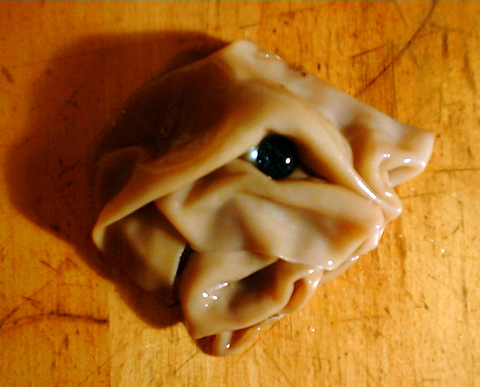
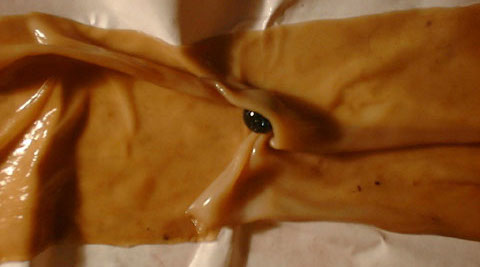
A SCOBY is a lichen-like symbiosis of yeast (a fungus) and bacteria. kombuτέχ is generated by Komagataeibacter xylinus which excretes fine fibrils of cellulose.
Yeasts (Saccharomyces) ferment sugars, producing ethanol and CO2
that feed
the acetic acid bacteria.
In a specific pH range, the yeast grows in budding chains around the
bacteria, sealing it off from intruders and aerating the
culture.
There are other symbionts like Gluconacetobacter kombuchae,
Schizosaccharomyces pombe, Torulaspora delbrueckii, Pichia fermentans.
The culture is floating on top of the substrate, right where the elements water and air meet.
The alga ascends through the mushroom from the water.
Bones
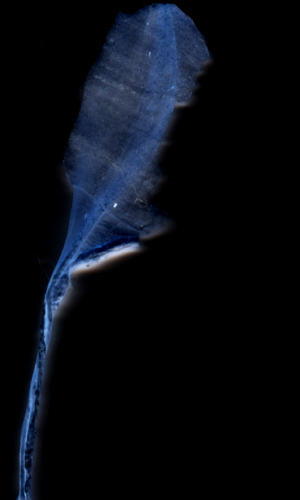
The tannins from the tea make the cellulose condense into a SCOBY on top of the substrate. Without tea, kombucha becomes a glassy jelly.
Adding siliceous earth into a tealess kombucha, filaments will grow, reaching from the sediment at the bottom of the container up to the surface (Ascending light process, Gestaltbildeprozess).
Those filamental tubes hold crystals of siliceous earth in their core.
Universal canvas
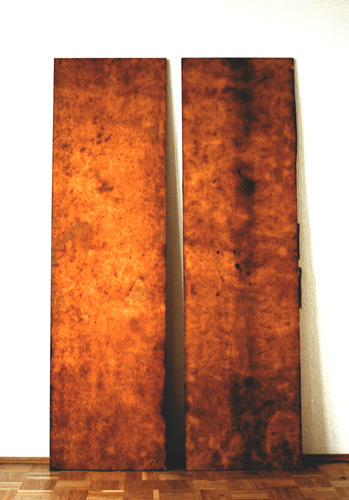
Kombucha membrane on core board
190 cm × 60 cm × 1.3 cm each
Cellulose is the most common organic compound in the biosphere.
Mask
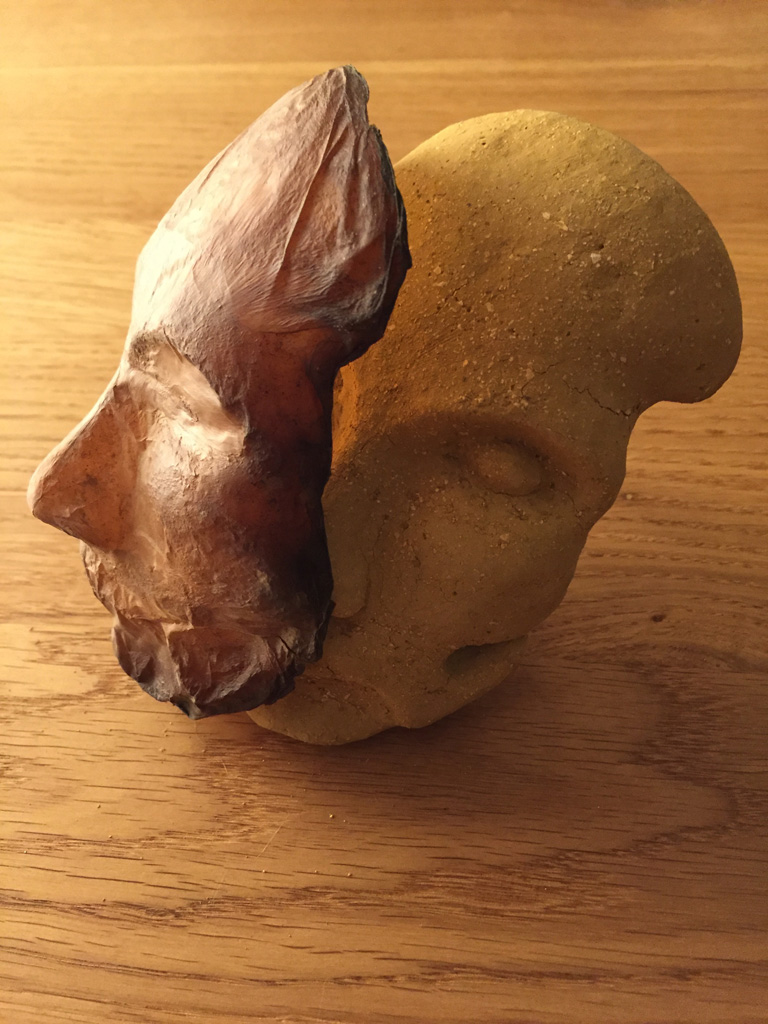
Kombucha membrane mask from clay mould
Length: 15 cm
Starry
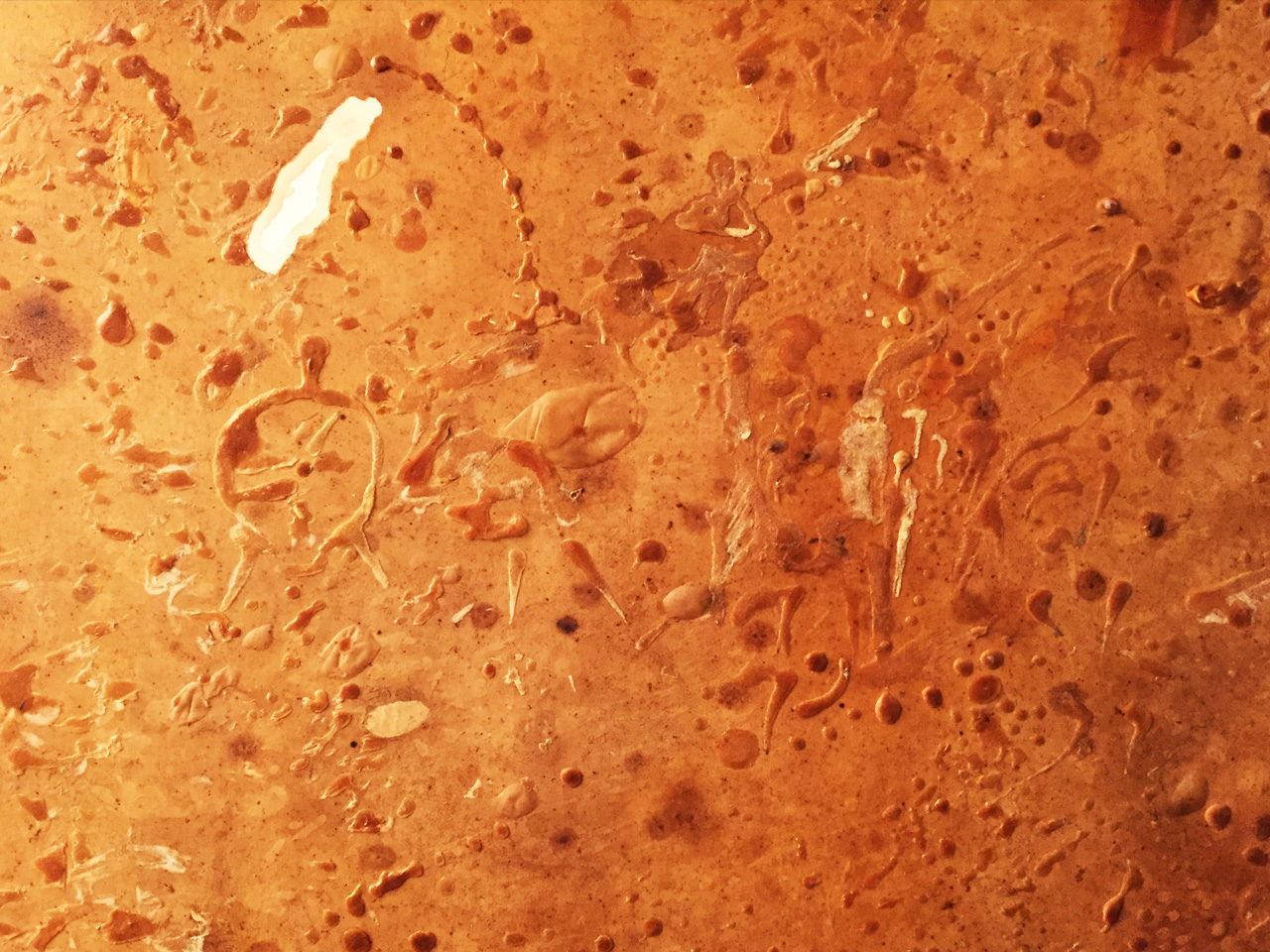
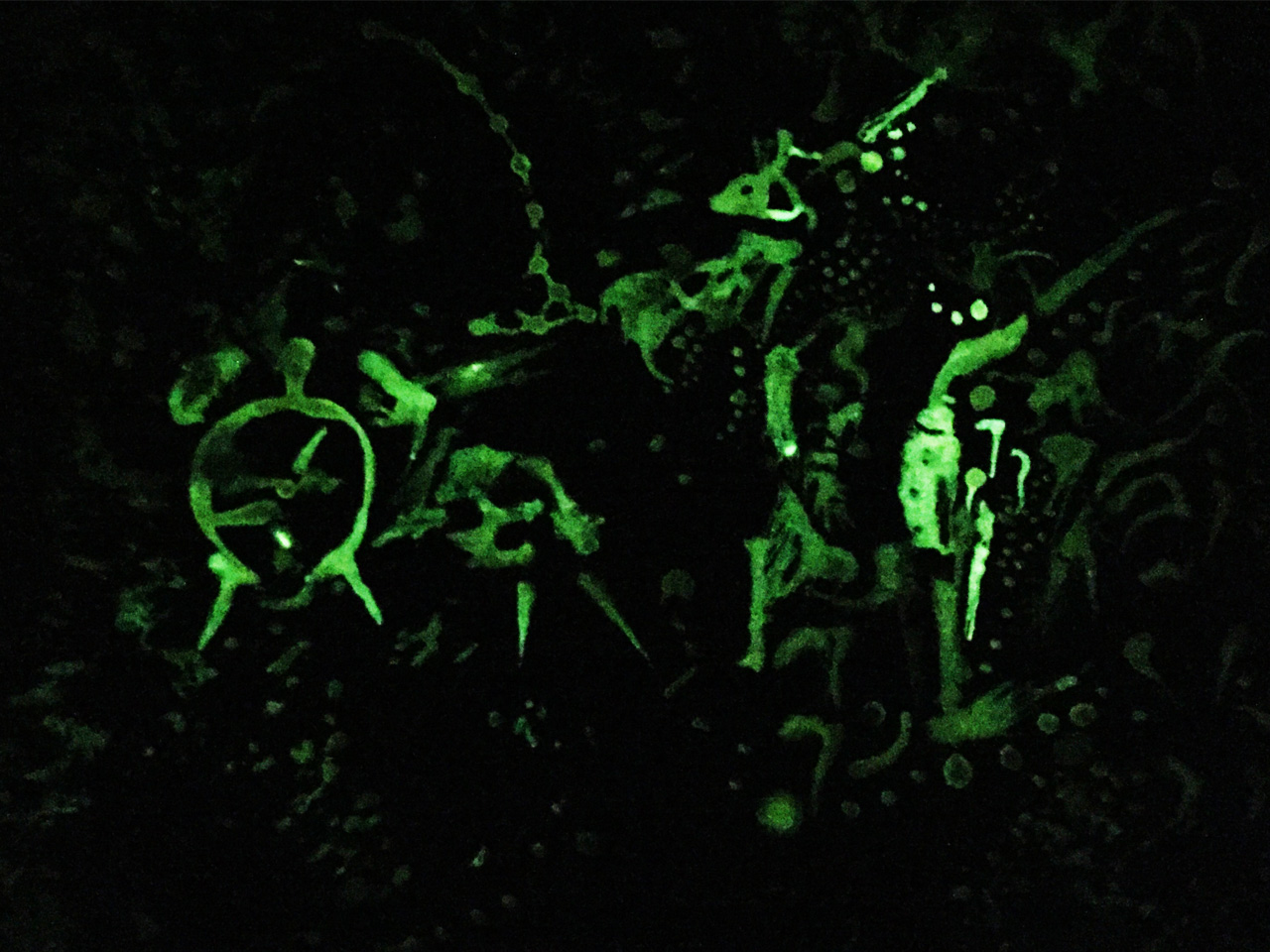
It is fascinating to paint on kombucha membrane with glow in the dark color. It is like painting with light onto bronze or color negative film.
M
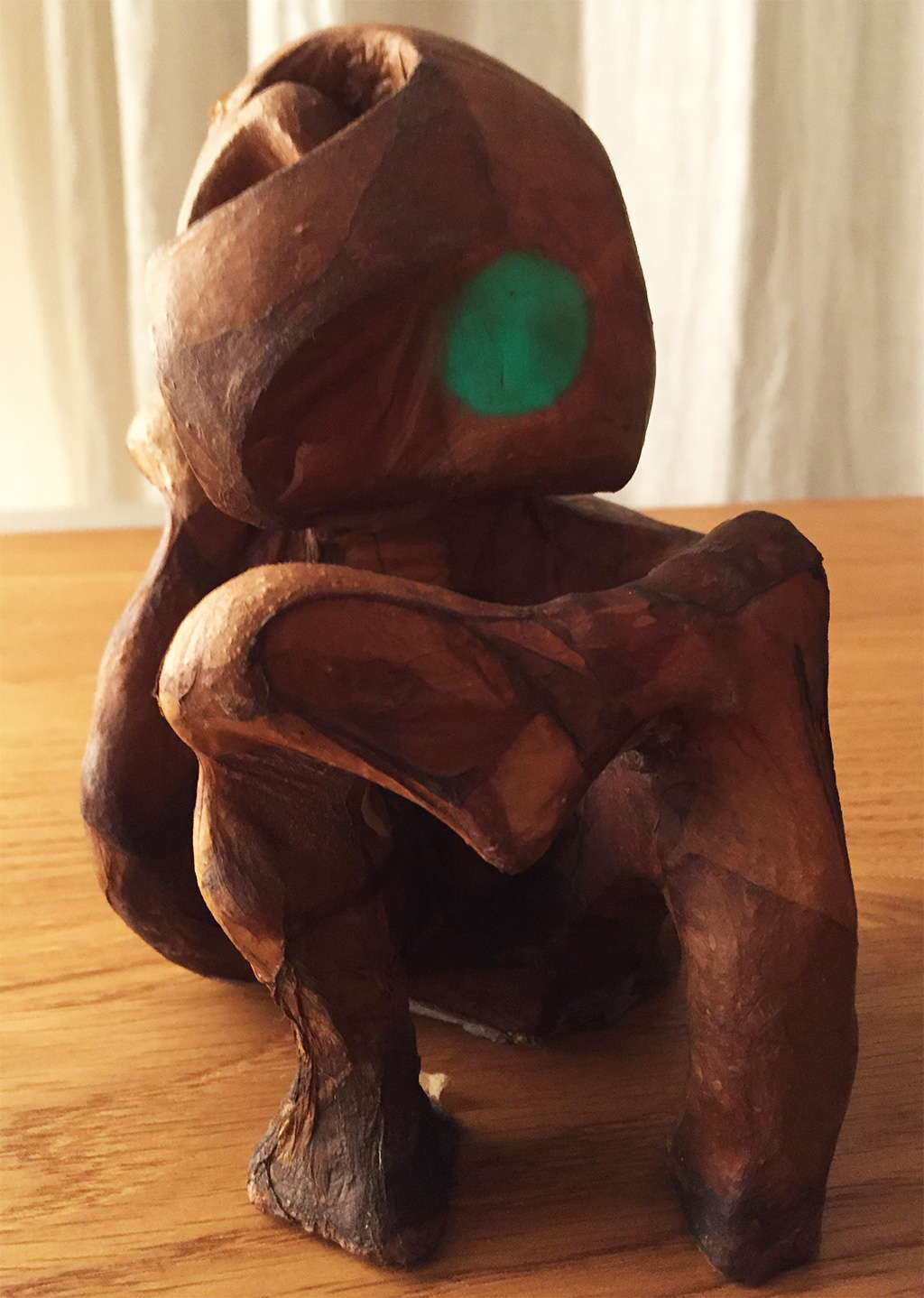
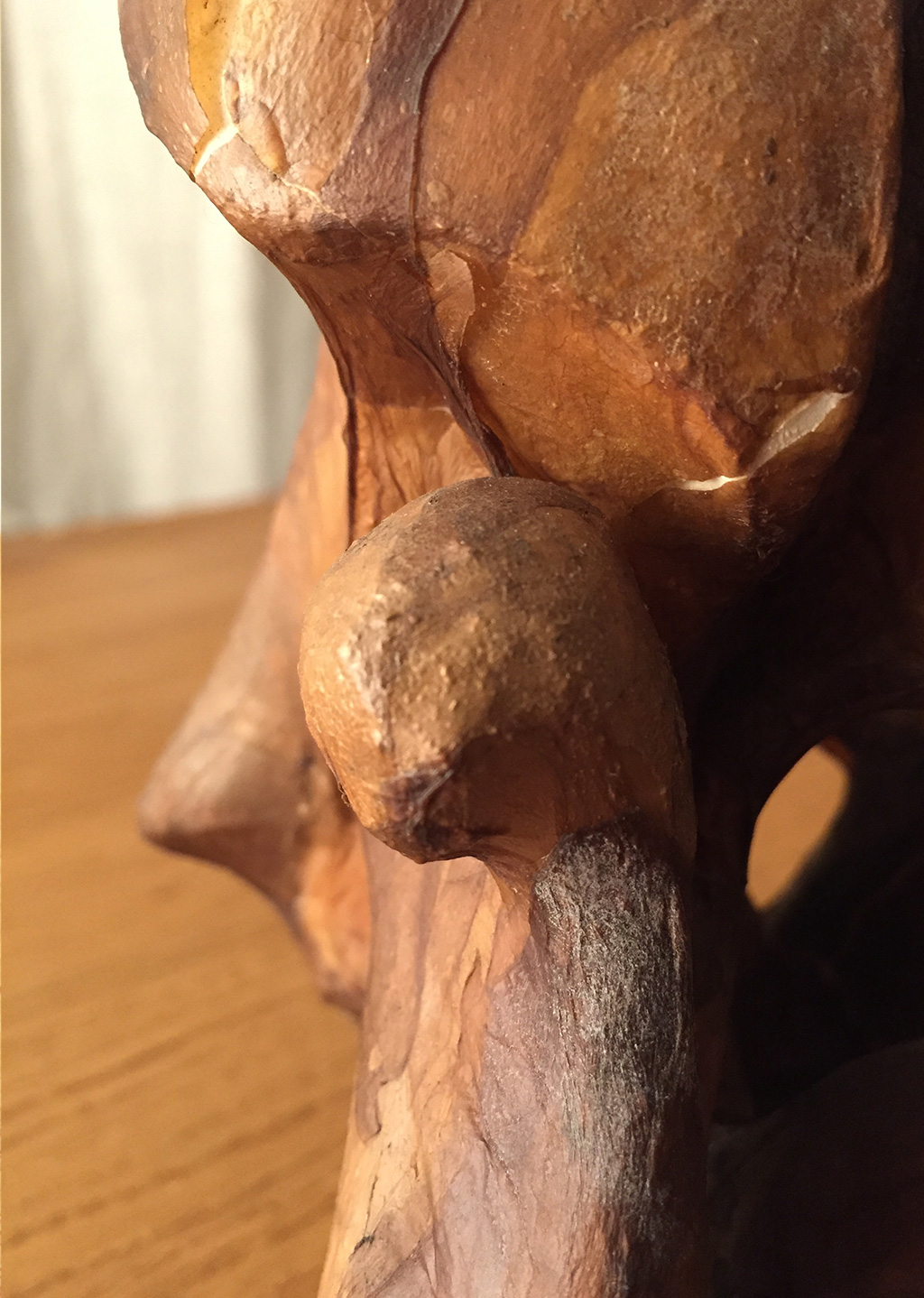
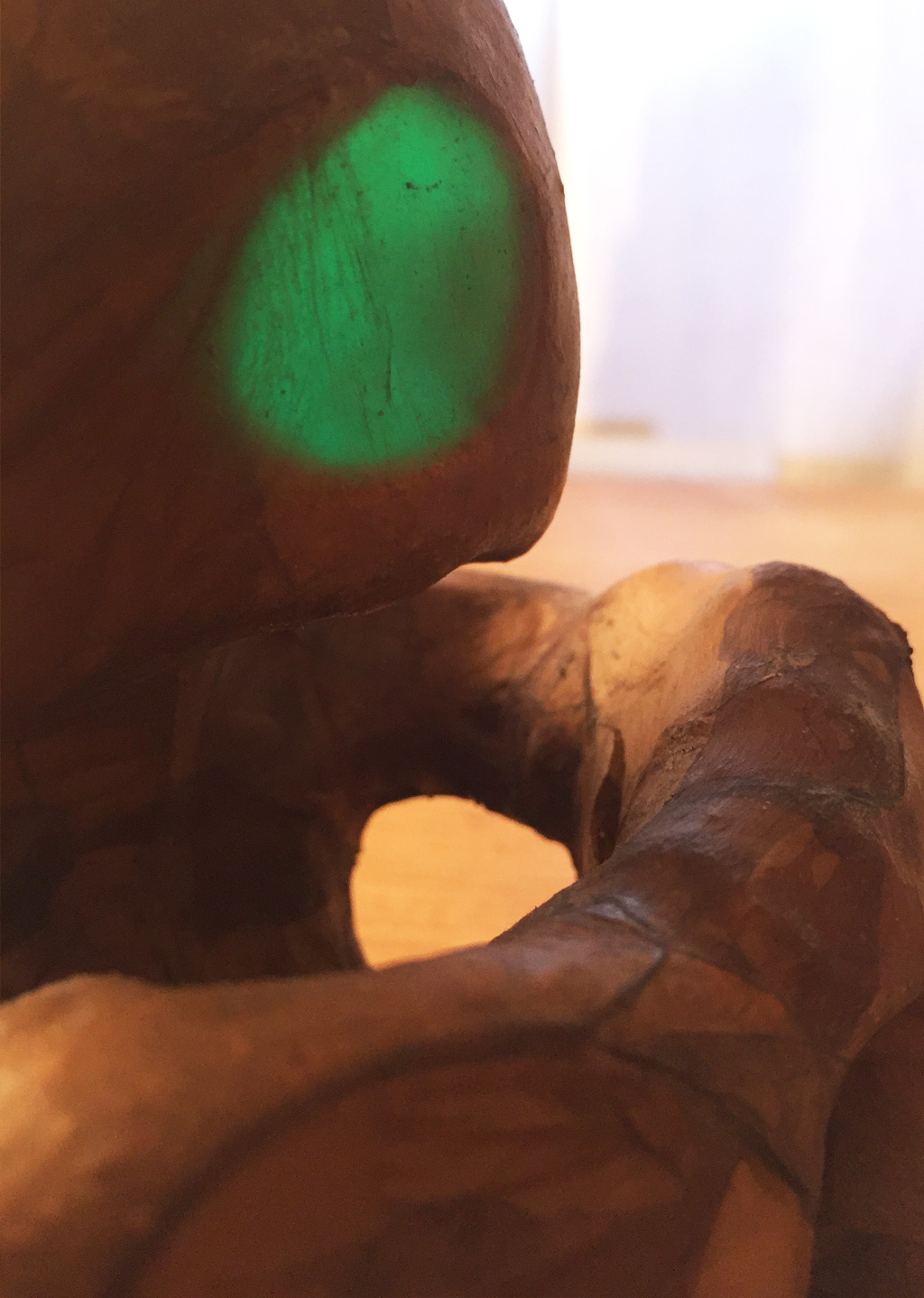
This figurine was made in 1997 from white clay and is still in unfired state. In 1999, the eye was painted with glow in the dark color, it was clothed in kombucha membrane and coated with latex.
- white clay
- glow in the dark paint
- kombucha membrane
- latex
Height: 16 cm
maks
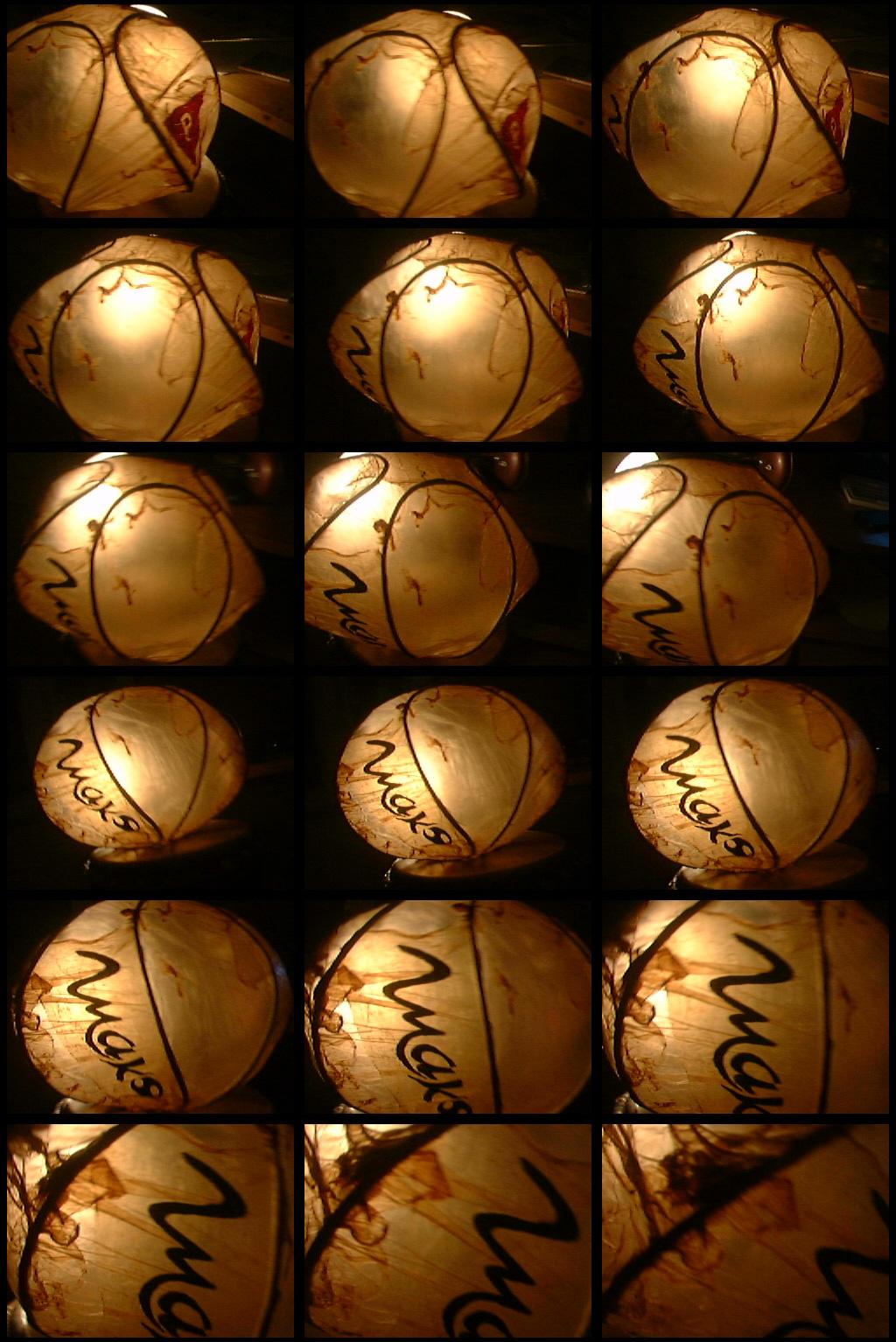
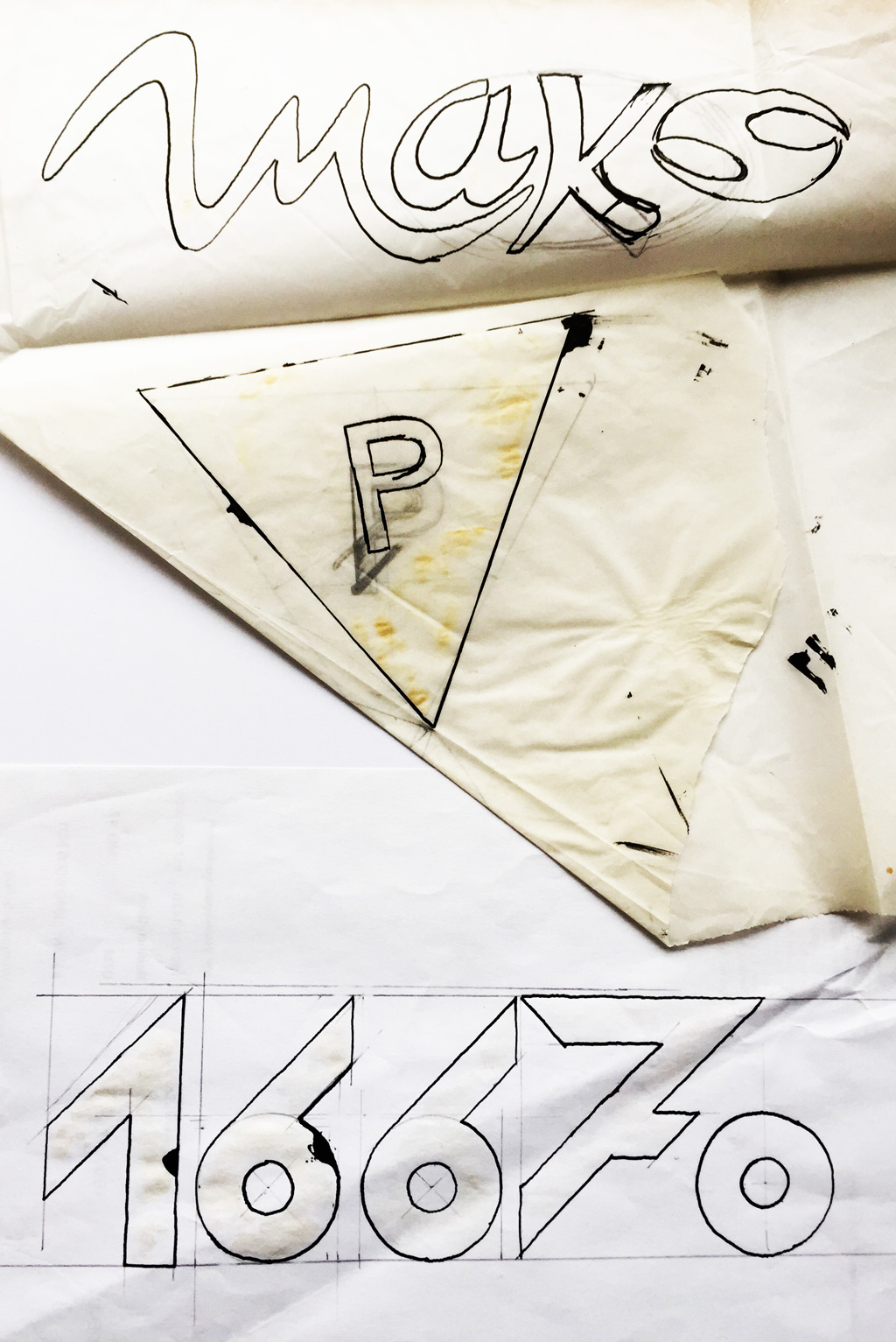
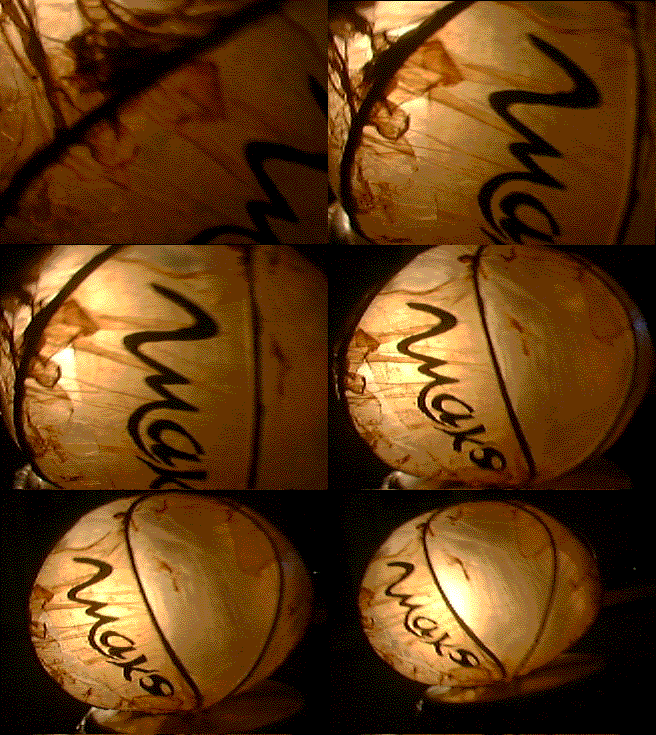
In the guestbook of Europe's first Body Worlds exhibition in Mannheim 1997, I left my notice of regret that no lampshades made from human skin were available in the souvenir shop.
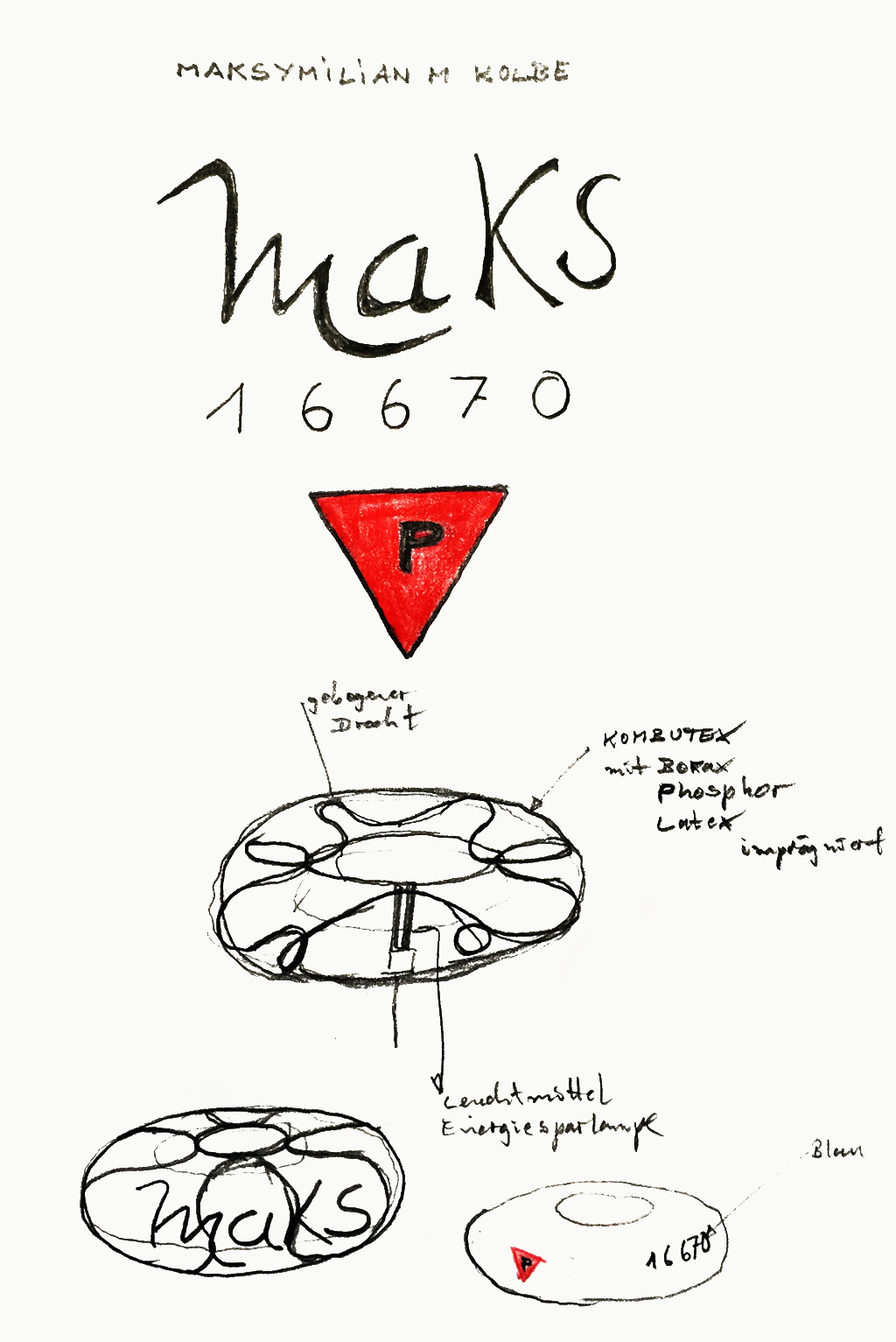
maks is a collage from 1999, inspired by Maksymilian Kolbe and the painful awareness of pop culture instrumentalizing sacred domains.
The original object is lost and very few images remain. The skeleton was painted with eight layers of phosphorescent lacquer actively glowing through the skin.
- lightning conductor wire, aluminum, 8 mm
- nitrocellulose lacquer
- phosphor pigments
- kombucha membrane
- indian ink
- soy protein
- borax
- mineral based color pigments
- latex
Size: 40 cm
Further kombucha artists & engineers
These experiments date back in 1999. A decade later I found others working with this organism in the sphere of art, which encouraged me to publish my experiences.
Haruko Okano
“When you dry it, though, it goes translucent, and it’s like dried human skin. So that was the motivation to use this material for talking about racism.”
[from an interview in October 2000]
Transvisceral Borders, Vancouver, 1997.
Viviane Le Courtois
“My art is not made to last, but to intrigue my public and question the role of art in contemporary society.”
[from pirate denver]
Nöle Giulini
“The skins remain alive in organic stasis and will regenerate if returned to the feeding solution.”
[from her website]
Paul Seidler & Aliisa Talja
Gary Cass
Suzanne Lee
TED Talk from 2011: Grow your own clothes
Legal notice
Information according to § 5 TMG
Daniel Hopp
This is a private, non-commercial website.
Contact: contact@kombutex.org
Copyright
Unless stated otherwise, all content on this website — text, images, videos, and other materials — is the property of Daniel Hopp and protected under applicable copyright laws. Reproduction requires prior written permission.
External links
This website contains links to external sites. Their content is the responsibility of the respective operators. Links were checked at the time of inclusion; ongoing monitoring is not feasible. If you notice a problematic link, please let me know.
Privacy
This website does not use cookies, analytics, or tracking. The web server records access logs (IP address, timestamp, requested page) for security and operational purposes. These logs are automatically deleted after 14 days. No personal data is shared with third parties. Responsible party: Daniel Hopp, contact@kombutex.org.